


Koiluna Kids · ages 7 to 11
Lumi & Jade Fifty Futures
A story that reads itself aloud, with a puzzle in almost every scene. Two friends, one pond, and forty-five futures to find.
The shop is not open yet: nothing can be bought, and nothing is charged.
- No ads
- Nothing to buy inside
- The game collects nothing
- Nobody dies
- Bought once: $9.99
Two friends. Three calls for help. One promise at a time.
Lumi is a golden koi. Jade is a young dragon. They are best friends and share one pond. One morning three calls for help arrive at once, and on each journey they can answer only one of them. Your family guides the two friends through a story that branches: every big promise you make leads somewhere different.
It reads aloud
With “Read to me” on (it starts on), the story reads itself: each scene, each clue, each puzzle, each hint, each promise and each ending. Two voices: Lumi’s tells the story, and Jade’s speaks Jade’s own lines. Everything read aloud is on the screen too.
Two clues, one answer
Thirty puzzles, and every one has two clues: one from each friend. It takes both to solve it. No timer, no score, and you can try as often as you like. Each puzzle has a trickier form for an older child.
Promises, and what comes of them
Talk about the choices, then pick one. The same promises always lead to the same ending: nothing is decided by chance, by speed, or by a mistake in a puzzle. A rewind lets you choose again.
Forty-five futures to find
Three roads leave the first scene, to ten adventures. Each future gives the two friends something and asks something of them. There is no single right answer, and families may fairly disagree about which is best. That is the point.
34 scenes 30 two-clue puzzles, each with a trickier form 4 crossroads 50 endings: 45 futures and 5 warning tales 79 pictures 3 mini games
How a scene goes
Share one screen. Take a friend each, or guide both yourself. Most scenes have three steps, and they open one at a time.

1 Look
Choose a clue, and Lumi or Jade looks closer. Each of them notices different things.

2 Solve
The two friends figure out the puzzle together. Each of them holds part of the answer, so both clues matter. “Hint” is there if you want it, and never comes unasked.
3 Promise
Talk about the choices, then pick one. A promise shows what you promise and what comes next. “Keep thinking” is always free.
One journey follows one adventure to one ending. The game saves by itself, so you can stop after any scene and go on another day. To find a different future, start a new journey or rewind, and make a different promise: a new journey remembers the clues you already found and the puzzles you already solved.
What it practices, honestly
It is a story first. The puzzles are part of the story, and each of the thirty practices one kind of reasoning. Every puzzle needs both friends’ clues, so a child learns to read two pieces of information together, and a short note after each one explains why the plan works.
- 9
Putting steps in order
Four safe crossings, a safe harbor day, a garden that takes time.
- 8
Sharing by a rule
Fifteen bundles for winter, eight watches to share, room on both sides.
- 6
Routes with rules
A path for both friends, the safe way around, the safety rope.
- 3
Two clues, two numbers
The first cups of water, a test gate, balancing the orchard rig.
- 2
Sorting by a rule
Following the tags, planning a visiting week.
- 2
Checked, or only a guess
What the storm book really knows, and what is only hoped.
Each puzzle has a trickier form with the same skill and one more step of reasoning. The choices practice something too: talking about what is fair, and listening when someone in the family would choose differently. The family guide inside the game has questions to talk about for each of the ten adventures. It is not a school course, and we make no promise about grades or tests.
Postcards from the futures
Every future has its own picture. Here are eight of the forty-five. Their names stay hidden until your family finds them.








Some of the people they meet
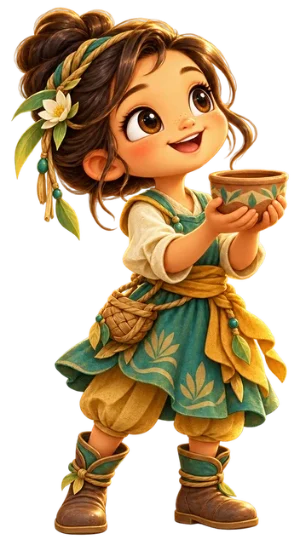
Mina
Mina sets a cup under every leaf to catch the rain.

Neri and her grandfather
Neri wants her grandfather’s boat-building song back.
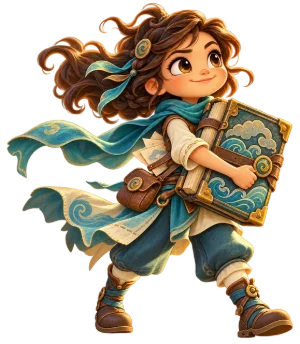
Wren
Wren keeps the storm book for her grandfather, Fen.
Pip
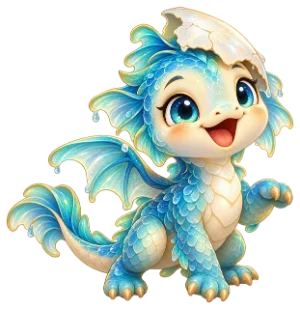
Pip is a baby river wyvern, and brand new.
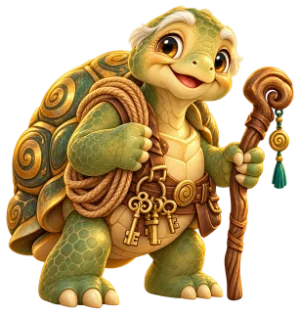
Quill
Quill the old tortoise keeps the mirror, and the rope.

Moss
Moss the old toad keeps the last Moonwell.
FOR GROWN-UPS
What you will want to know first
No ads. Nothing to buy inside.
The game is paid for once. There is no advertising, no shop, no coins and no subscription, and it has no links out to the internet.
Nothing is collected.
The game asks for no names, has no accounts for children, no chat and no leaderboards, and sends us nothing. It does not use the camera, microphone or location. For parents: privacy.
Three children can each keep a story.
Each device keeps three story places, picked by picture: the koi, the dragon and the lantern. Brothers and sisters do not have to share.
Plays in the browser, on any screen.
On a computer, a tablet or a phone: the game is made for small screens too. Nothing to install. The website needs a connection while you play.
No timer, no score, no losing.
A wrong answer only means trying again. A try that does not work is answered with which friend’s clue already fits. The futures are life paths: nobody wins or loses them.
A page of your own.
The Grown-ups page inside the game has the family guide, the things you may want to talk about, a backup file for each story place, and which puzzles your child has solved. Its tools are behind an arithmetic question.
What the story is like
Nobody dies, nobody is cruel, and there is no fighting. The story does ask real questions: who gets the water when there is not enough, whether a secret is yours to share, what you owe to a little one who needs a home. These are the themes a parent may want to know about:
- Mild peril. In five clearly warned, optional “warning tales,” a friend is hurt or stranded for a while after taking a shortcut the story warned against. Help comes, and the friend is mending by the end of the page. A child who would prefer not to see them can simply choose “Keep thinking.”
- Memory loss in old age. A grandfather has forgotten a song. His granddaughter always gets it back for him.
- A child who needs a home. A baby creature separated from her clan by a flood is raised by friends, by her clan, by two cousins or in a shared nursery. This touches on adoption, fostering and kinship care, and one puzzle plans a week of visits between homes.
- Floods and leaving home. A flood closes a bridge and washes out a road, and families leave islands that are sinking. No villager or family is hurt.
- A long winter. A mountain’s deep warmth sinks for a long winter rest, and a village learns to live through the cold.
- Scarcity and fairness. Who gets the water, the warmth or the harbor when there is not enough for everyone.
- Goodbyes. In some futures the two friends live apart, leave a home for good, give up magic and grow old, or become one guardian with two voices.
- Make-believe magic: a wishing well, a mirror to another world, a storm crown.
One price. Bought once.
One payment, and the game plays in your browser: on a computer, a tablet or a phone. You can have a full refund within 7 days of purchase, however much has been played; a refund ends access.
Fifty Futures
$9.99 once
- Play in the browser: on a computer, a tablet or a phone
- The whole story: 34 scenes, 30 puzzles, 45 futures
- Sign in on any device of your household
- Nothing to buy inside. No subscription.
US customers only. You must be 18 or over to buy. Sales tax, where it applies, is added at checkout. Playing online is a license to play in your browser for as long as we run the service, not a copy you own.
The shop is not open yet, so the button says “Opening soon”: nothing can be bought, and nothing is charged. Already have a key or a pass? Sign in or redeem a pass.
Checkout is on Stripe’s own page. Your receipt and your license key are emailed to you. Already bought? Sign in. Have a pass?
Where it runs
- In the browserOn a computer, a tablet or a phone: the game is made for small screens too. The website needs a connection while you play.
- WindowsA Windows program is on the way. When it is released, it will be included, at no further charge, for everyone who has bought Fifty Futures here.
- AndroidAn app is coming to Google Play. It is not out yet. Meanwhile the game plays in the browser.
- iPhone and iPadThere is no app. The game plays in the browser.
How it was made
We would rather you heard it from us. The story, the puzzles and the program were made with the help of AI writing and coding tools, and reviewed by us. All 79 pictures were made with the help of AI image tools and checked by us. Both voices are computer-generated; no recording of a real person is used.
The two voices are stock voices of one voice engine: one is Lumi’s, who also tells the story, and one speaks Jade’s own lines. Credits.
Questions grown-ups ask
Who is it for?
Children of about 7 to 11. It is at its best played together and read aloud: share one screen, take a friend each, or guide both yourself. A child who cannot read yet may sometimes want a grown-up close by, because a few short lines (button labels, counts that change) are shown but not spoken.
Is anything scary or sad?
Nobody dies, nobody is cruel, and there is no fighting. The story is kind, but it is not always light: a grandfather has forgotten a song he loved, a baby creature swept from her clan by a flood needs the right home, families leave island homes that are slowly sinking, and friends sometimes choose to live apart. In the five clearly warned, optional “warning tales” a friend is hurt or stranded for a while after a shortcut the story warned against; help comes, and the friend is mending by the end of the page. The whole list is in what the story is like, and inside the game on the Grown-ups page.
Does it need the internet?
Yes: the game plays in the browser, and the website needs a connection while you play. A Windows program is on the way. When it is released, it will be included, at no further charge, for everyone who has bought Fifty Futures here.
Can my children each have their own story?
Yes. Each device keeps three story places, picked by picture: the koi, the dragon and the lantern. Each place has its own story, its own futures and its own solved puzzles. No names are asked for or kept.
Where is the story saved? Can we move it?
On the device it is played on: in the browser. It is not an online account, and another device will not have it. On the Grown-ups page inside the game, a grown-up can save a backup file of a story place and bring it back on another device. In a private browsing window the story may not be saved at all, and some browsers clear the saved data of a site that has not been opened for a while.
What do I get when I buy?
One payment, and the game plays in your browser: on a computer, a tablet or a phone, for $9.99. You get a license key and an emailed receipt, and you sign in with your email on any device of your household. Playing online is a license to play in your browser for as long as we run the service, not a copy you own. Koiluna Kids: Fifty Futures is sold from the United States, in US dollars, to customers in the United States. Sales tax, where it applies, is added at checkout.
Can I get my money back?
Yes. You can have a full refund within 7 days of purchase, however much has been played; a refund ends access. Write to support@koilunakids.com from the address you bought with. The whole policy is on the refunds page.
Is there an app for phones and tablets?
The game plays in the browser on a phone or a tablet today: it is made for small screens too. An Android app is coming to Google Play; it is not out yet. There is no iPhone or iPad app.
Was AI used to make it?
Yes, and we say so plainly. The story, the puzzles and the program were made with the help of AI writing and coding tools, and reviewed by us. All 79 pictures were made with the help of AI image tools and checked by us. Both voices are computer-generated; no recording of a real person is used. More on the credits page.
What do you know about my child?
Nothing. The game asks for no name and no age, has no accounts for children, and sends us nothing. This website keeps the buyer's email address and the purchase record, and that is all. The privacy policy has a section for parents.